I've once again been remiss in keeping up the blog for 2019, but here's a quick post to close out the year! La-La Land Records recently announced Nevada Smith: The Paramount Westerns Collection as one of their Black Friday 2019 titles. I co-produced this collection and co-wrote the liner notes with Frank K. DeWald. This 4-CD set features 11 scores from 11 composers spanning two decades of Paramount western cinema: Nevada Smith (Alfred Newman), El Dorado (Nelson Riddle), Three Violent People (Walter Scharf), Kid Rodelo (Johnny Douglas), Walk Like a Dragon (Paul Dunlap), Will Penny (David Raksin), The Hangman (Harry Sukman), Branded (Roy Webb), The Furies (Franz Waxman), Copper Canyon (Daniele Amfitheatrof) and Streets of Laredo (Victor Young). The miraculous restoration work and mastering is by Chris Malone, and the gorgeous artwork is by Dan Goldwasser. I'm immensely proud of this collection, and hope fans of film music (especially Golden Age fans) will enjoy it as much as I've enjoyed working on it these past two years. I hope to have more to say about this release (and its individual scores) later ... but for now, special thanks to LLL's MV Gerhard and Matt Verboys, Lukas Kendall and the others who helped make it possible! Sound clips available at the LLL product page, where you can pick this up today.
Tuesday, December 31, 2019
Nevada Smith: The Paramount Westerns Collection
I've once again been remiss in keeping up the blog for 2019, but here's a quick post to close out the year! La-La Land Records recently announced Nevada Smith: The Paramount Westerns Collection as one of their Black Friday 2019 titles. I co-produced this collection and co-wrote the liner notes with Frank K. DeWald. This 4-CD set features 11 scores from 11 composers spanning two decades of Paramount western cinema: Nevada Smith (Alfred Newman), El Dorado (Nelson Riddle), Three Violent People (Walter Scharf), Kid Rodelo (Johnny Douglas), Walk Like a Dragon (Paul Dunlap), Will Penny (David Raksin), The Hangman (Harry Sukman), Branded (Roy Webb), The Furies (Franz Waxman), Copper Canyon (Daniele Amfitheatrof) and Streets of Laredo (Victor Young). The miraculous restoration work and mastering is by Chris Malone, and the gorgeous artwork is by Dan Goldwasser. I'm immensely proud of this collection, and hope fans of film music (especially Golden Age fans) will enjoy it as much as I've enjoyed working on it these past two years. I hope to have more to say about this release (and its individual scores) later ... but for now, special thanks to LLL's MV Gerhard and Matt Verboys, Lukas Kendall and the others who helped make it possible! Sound clips available at the LLL product page, where you can pick this up today.
Friday, December 14, 2018
Catching up with Intrada (Part 4)
Since some time has gone by since my most recent update (too much time, as usual!) a few more Intrada albums have seen release, so I figured I'd whip up a quick post! First up is the world premiere release of Another Stakeout by Arthur B. Rubinstein. This was a somewhat bittersweet project to work on. The music itself is a joy, alternating between rich drama, crackling action, and lighthearted comedic material to reflect the eccentricities of the film on which it is based. Rubinstein had a much larger ensemble to work with on this sequel than he did the original Stakeout, and it really shows! It's just a really fun listening experience. So that's the "sweet." As for the "bitter," readers may know that maestro Rubinstein passed away during the production of this album. He was a rare talent and I'm sorry I never got to converse with him. But it was very moving to see the respect paid by Intrada on this release, the last album he was personally involved with. I was honored to be a part of it.
The advent of winter saw two more Intrada releases I was proud to work on. The first is a double-feature of relatively obscure TV-movies scored by the great Georges Delerue: Sin of Innocence, a drama about the taboo love between teenage step-siblings, and Love Thy Neighbor, a seriocomic film about jilted neighbors who find solace in each other's arms—both perfect fodder for Delerue, who was second to none when it came to tales of complicated romance. The second is Hider in the House, a little-seen thriller starring Gary Busey, Mimi Rogers and Michael McKean about a crazed stalker (Busey, naturally) who ensconces himself in the attic of a family home. The score is by Christopher Young, and fans of his distinctive horror/thriller sound, which marries disturbing soundscapes with surprisingly lush emotion, will be well pleased. This is a reissue of the original 1990 album, long out of print, with new packaging and notes.
Monday, January 1, 2018
Catching up with Intrada (Part 3)
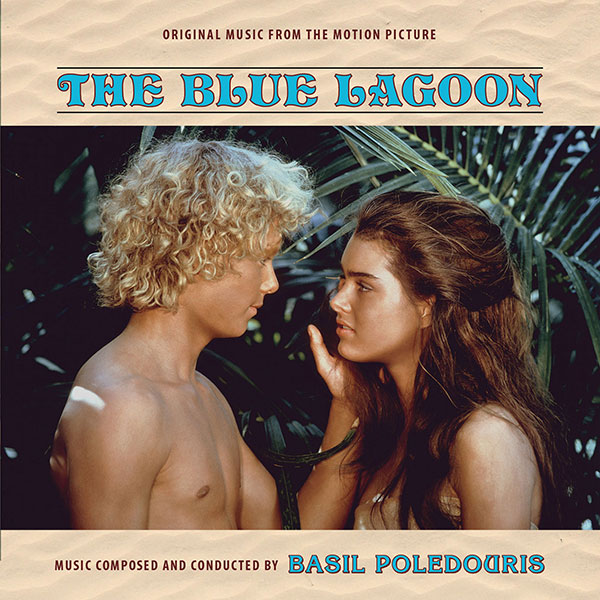
I'm ringing in the new year with the third part of my "Catching up with Intrada" spotlight! After providing notes for the first film in the series, I was delighted to be asked to do notes for The Monkey King 2. It's another exquisite fantasy score from Christopher Young, and the first album I've done for a theatrically released film still in its initial run. The sequel is less action-packed than the original, but I personally found it more dramatically rich. After that came a pair of scores by a man I much admired, the late Basil Poledouris. The Blue Lagoon and Return to the Blue Lagoon were written at very different points in his career, the former being one of his earliest major scores and the latter being written after he was well-established in the industry. Both, however, are stunning works of symphonic beauty.
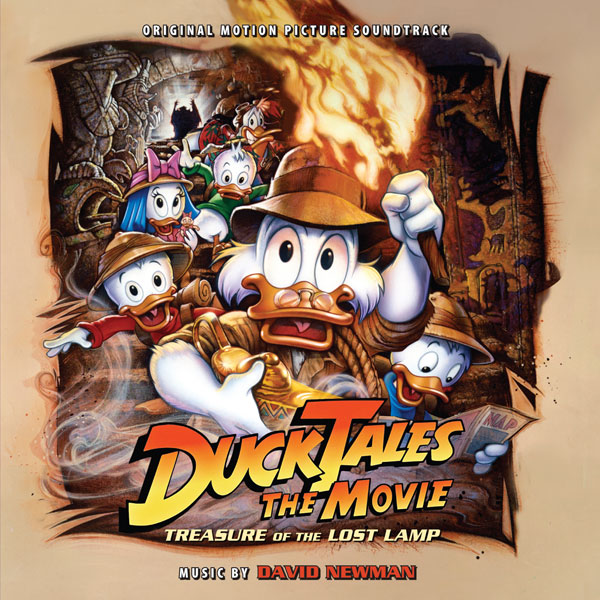
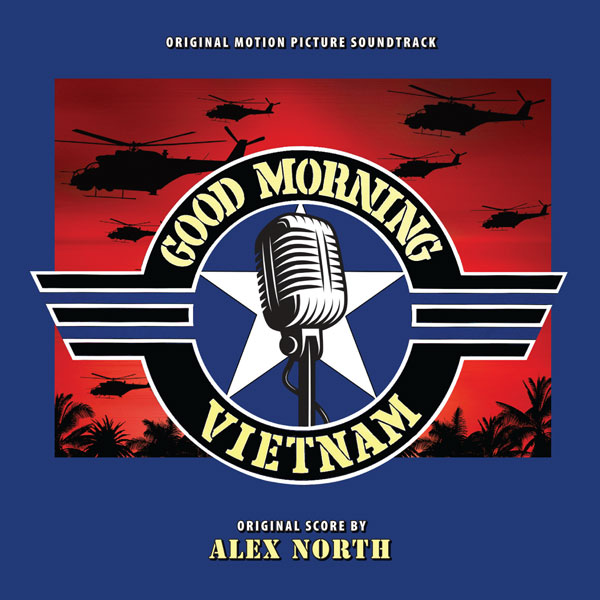
Next came some scores by David Newman, one of the hardest-working conductors in the business and a fine composer who knows how to marshal the resources provided by a large symphony orchestra. First up was his score to DuckTales: The Movie—Treasure of the Lost Lamp. I have very fond memories of this film from my childhood, and the music is as grand and adventurous as one could hope for. The second score was Operation Dumbo Drop, a family adventure score that I missed the first time around but was very happy to discover thanks to this release. I'd have loved it as a teenager, and it holds up incredibly well today. This soundtrack was paired on CD with an important score by Alex North: his complete score for the classic film Good Morning, Vietnam. There's not much underscore in the film, which is famous for its use of pop songs, but what's there is haunting and emotionally vivid.
These projects were followed with a pair of epics, one for the big screen and one for the small screen. James Horner's Troy is a score that I didn't get a true impression of the first time I heard it, which was in hacked-up form to accompany the director's cut DVD. For this project, I sought out the theatrical cut and was intrigued to discover that, contrary to many critics who found the director's cut a huge improvement, I much preferred the abbreviated cut with Horner's score intact. (For completists who pick up this album, don't toss your original CD, as it contains a few minutes of material that had to be left off this new edition.) The small-screen epic was a brand new edition of Maurce Jarre's Shōgun. I had previously done notes for Intrada's straight reissue of the original LP. This release, however, was a monumental 3-CD presentation of the full score, an album reconstruction and copious extras. I was honored to produce this CD for Intrada with Lukas Kendall, in addition to penning all-new notes.
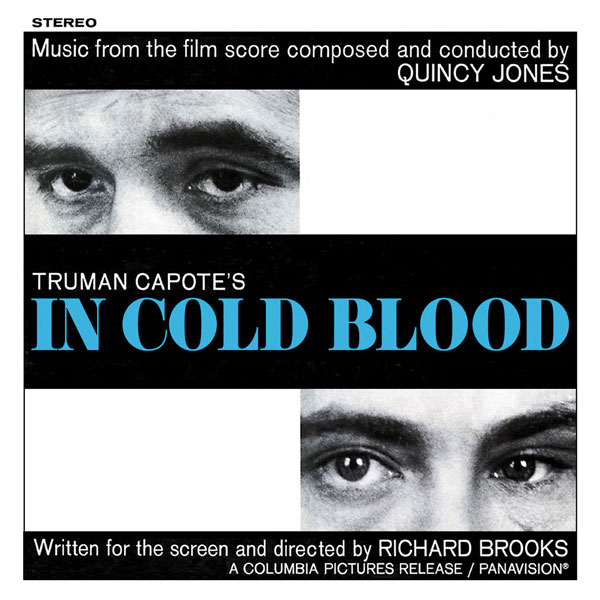
Finally, my most recent release for Intrada was a double-feature of music by the legendary Quincy Jones. Mackenna's Gold is a western, and a very fine one, with bracing themes and a memorable ballad performed by José Feliciano. In Cold Blood is an incredible jazz fever dream of a score for the 1967 film based on Truman Capote's famous memoir. These are two of Jones' finest scores, and it was an absolute delight to get to write about them.
Thanks for revisiting these projects with me! Still to come: retrospectives for Quartet, La-La Land and a post about my first piece commissioned specially for an LP release.
Next came some scores by David Newman, one of the hardest-working conductors in the business and a fine composer who knows how to marshal the resources provided by a large symphony orchestra. First up was his score to DuckTales: The Movie—Treasure of the Lost Lamp. I have very fond memories of this film from my childhood, and the music is as grand and adventurous as one could hope for. The second score was Operation Dumbo Drop, a family adventure score that I missed the first time around but was very happy to discover thanks to this release. I'd have loved it as a teenager, and it holds up incredibly well today. This soundtrack was paired on CD with an important score by Alex North: his complete score for the classic film Good Morning, Vietnam. There's not much underscore in the film, which is famous for its use of pop songs, but what's there is haunting and emotionally vivid.
These projects were followed with a pair of epics, one for the big screen and one for the small screen. James Horner's Troy is a score that I didn't get a true impression of the first time I heard it, which was in hacked-up form to accompany the director's cut DVD. For this project, I sought out the theatrical cut and was intrigued to discover that, contrary to many critics who found the director's cut a huge improvement, I much preferred the abbreviated cut with Horner's score intact. (For completists who pick up this album, don't toss your original CD, as it contains a few minutes of material that had to be left off this new edition.) The small-screen epic was a brand new edition of Maurce Jarre's Shōgun. I had previously done notes for Intrada's straight reissue of the original LP. This release, however, was a monumental 3-CD presentation of the full score, an album reconstruction and copious extras. I was honored to produce this CD for Intrada with Lukas Kendall, in addition to penning all-new notes.
Finally, my most recent release for Intrada was a double-feature of music by the legendary Quincy Jones. Mackenna's Gold is a western, and a very fine one, with bracing themes and a memorable ballad performed by José Feliciano. In Cold Blood is an incredible jazz fever dream of a score for the 1967 film based on Truman Capote's famous memoir. These are two of Jones' finest scores, and it was an absolute delight to get to write about them.
Thanks for revisiting these projects with me! Still to come: retrospectives for Quartet, La-La Land and a post about my first piece commissioned specially for an LP release.
Sunday, December 31, 2017
Catching up with Intrada (Part 2)
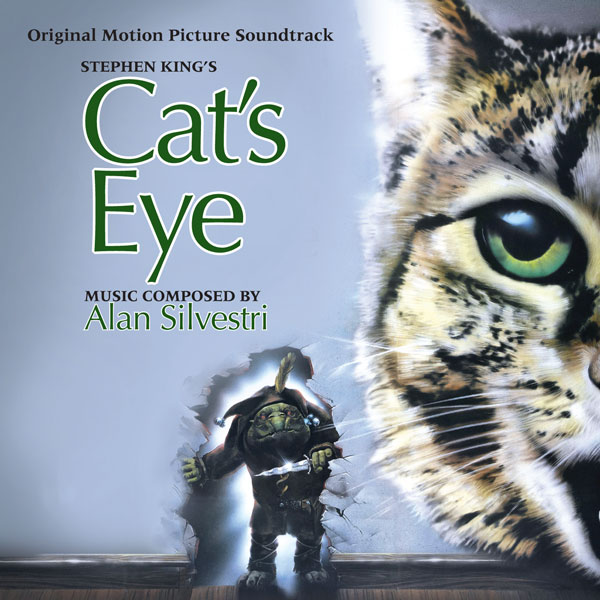
Picking up where I left off, we begin with an interesting bit of eighties electronica: Alan Silvestri's score for the Stephen King anthology film Cat's Eye ... a release that seems like it ought to be of special interest to fans riding the nostalgia wave of Stranger Things and It. It's also intriguing from the standpoint of coming between Romancing the Stone and Back to the Future in Silvestri's filmography; you can hear him working out some ideas that would be developed in the latter score. After this project, I worked on a CD containing two classic LPs: The Heroes of Telemark by Malcolm Arnold and Stagecoach by Jerry Goldsmith. The former is a realistic wartime thriller about a vital WWII espionage mission, and is classic Arnold. Stagecoach is perhaps the loveliest of Goldsmith's many western scores, and this is a pristine presentation of the beautiful album re-recording (the film tracks have been released separately, most recently by La-La Land Records).
Next up was The Monkey King, a modern fantasy epic from China scored by American composer Christopher Young. This is a fairly massive orchestral effort, of a type not seen too often these days, and fans of the composers work ought to be very pleased. This was followed by Unidentified Flying Oddball, a live-action Disney comedy from 1979 that was released in some markets as The Spaceman and King Arthur. The film is very loosely adapted from Mark Twain's A Connecticut Yankee in King Arthur's Court, and features a dynamic and very fun score by Ron Goodwin. I also had the pleasure of seeing an old favorite revisited with Intrada's deluxe expanded version of Laurence Rosenthal's masterpiece Clash of the Titans making its way to vinyl. A portion of my notes for the CD release were extracted and repurposed, with a few minor tweaks and fixes. Incidentally, the classic poster art by the Brothers Hildebrandt looks simply fantastic at LP scale!
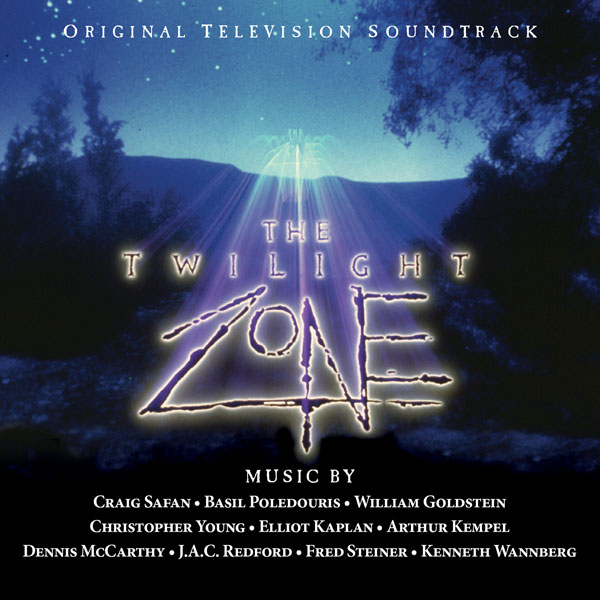
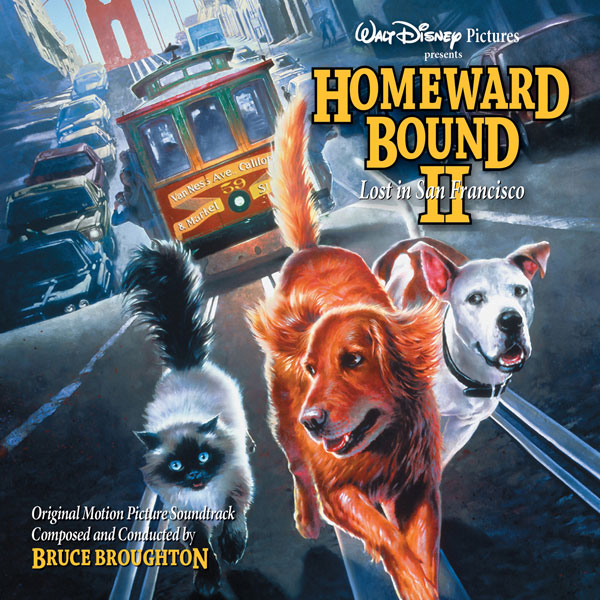
After that came a magnificent 3-CD set containing scores from the eighties revival of The Twilight Zone. While the series itself never gained the notoriety of its ancestor, music supervisor Robert Drasnin gathered together a team of distinguished veterans and up-and-coming talents to provide numerous original scores. On this collection you will hear amazing work by Christopher Young, Basil Poledouris, Kenneth Wannberg, Dennis McCarthy, J.A.C. Redford, Craig Safan, Fred Steiner, Elliot Kaplan, Arthur Kempel and William Goldstein, in addition to the revamped theme song by Merl Saunders and The Grateful Dead! Very highly recommended. Finally (at least as far as this post is concerned) we have Homeward Bound II: Lost in San Francisco, another brilliant family adventure score from one of my favorite film composers, Bruce Broughton. This score stands proudly alongside his score to the original film (also released by Intrada) and surpasses it in some ways, in my opinion. It's always a treat to write about maestro Broughton's music, and this was no exception.
This concludes Part 2! The third and final round of Intrada catch-up will feature more Young and Poledouris, a heaping helping of David Newman, monumental works by Horner and Jarre, and a pair of classic scores by the great Quincy Jones. Stay tuned!
Next up was The Monkey King, a modern fantasy epic from China scored by American composer Christopher Young. This is a fairly massive orchestral effort, of a type not seen too often these days, and fans of the composers work ought to be very pleased. This was followed by Unidentified Flying Oddball, a live-action Disney comedy from 1979 that was released in some markets as The Spaceman and King Arthur. The film is very loosely adapted from Mark Twain's A Connecticut Yankee in King Arthur's Court, and features a dynamic and very fun score by Ron Goodwin. I also had the pleasure of seeing an old favorite revisited with Intrada's deluxe expanded version of Laurence Rosenthal's masterpiece Clash of the Titans making its way to vinyl. A portion of my notes for the CD release were extracted and repurposed, with a few minor tweaks and fixes. Incidentally, the classic poster art by the Brothers Hildebrandt looks simply fantastic at LP scale!
After that came a magnificent 3-CD set containing scores from the eighties revival of The Twilight Zone. While the series itself never gained the notoriety of its ancestor, music supervisor Robert Drasnin gathered together a team of distinguished veterans and up-and-coming talents to provide numerous original scores. On this collection you will hear amazing work by Christopher Young, Basil Poledouris, Kenneth Wannberg, Dennis McCarthy, J.A.C. Redford, Craig Safan, Fred Steiner, Elliot Kaplan, Arthur Kempel and William Goldstein, in addition to the revamped theme song by Merl Saunders and The Grateful Dead! Very highly recommended. Finally (at least as far as this post is concerned) we have Homeward Bound II: Lost in San Francisco, another brilliant family adventure score from one of my favorite film composers, Bruce Broughton. This score stands proudly alongside his score to the original film (also released by Intrada) and surpasses it in some ways, in my opinion. It's always a treat to write about maestro Broughton's music, and this was no exception.
This concludes Part 2! The third and final round of Intrada catch-up will feature more Young and Poledouris, a heaping helping of David Newman, monumental works by Horner and Jarre, and a pair of classic scores by the great Quincy Jones. Stay tuned!
Friday, June 10, 2016
Catching up with Intrada (Part 1)
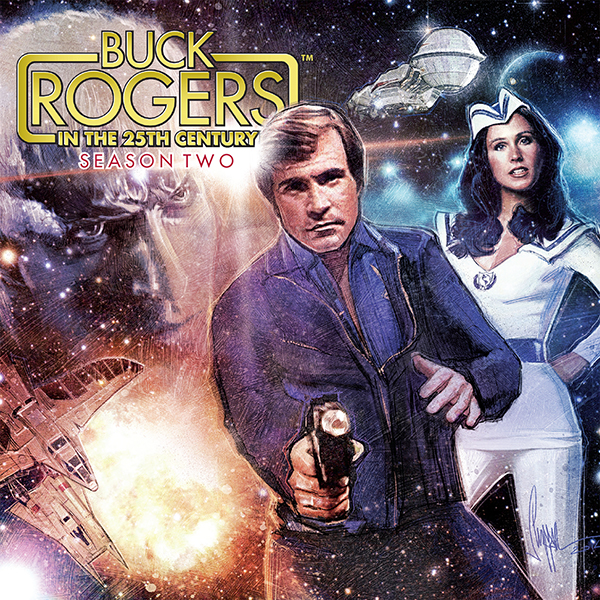
There's quite a lot of ground to cover since my last music update, so I'll be going through the releases I've worked on by label. First up is Intrada, which has had such a prodigious output these last few years that I'll be breaking my recap into two parts! We begin with Buck Rogers in the 25th Century - Season Two, a deluxe 4-CD set of music from the classic television series. It contains scores by Stu Phillips, John Cacavas and Herbert Don Woods, but the majority of the music on this set was composed by Bruce Broughton, who joined the show during its second season and confirmed the outstanding dramatic chops that would help him become one of the most respected composers in Hollywood. The set is now sold out, but well worth hunting down!
For Intrada, I also had the opportunity to write about two scores by the late James Horner. Though I never had an opportunity to personally interview Mr. Horner, it is always a great honor and pleasure to write about his music. He described himself as a colorist first and foremost, and these two scores are masterful examples. The first, Gorky Park, is a wintry blend of eerie dissonance, powerful low brass, funky urban beats, interpolations of Tchaikovsky and a love theme for the ages. The second, A Far Off Place, is a dynamic, symphonic score that taps into the grandeur, romance and adventure of Africa. Horner was a titan in his field, and these works are just two examples of why he will be so badly missed.
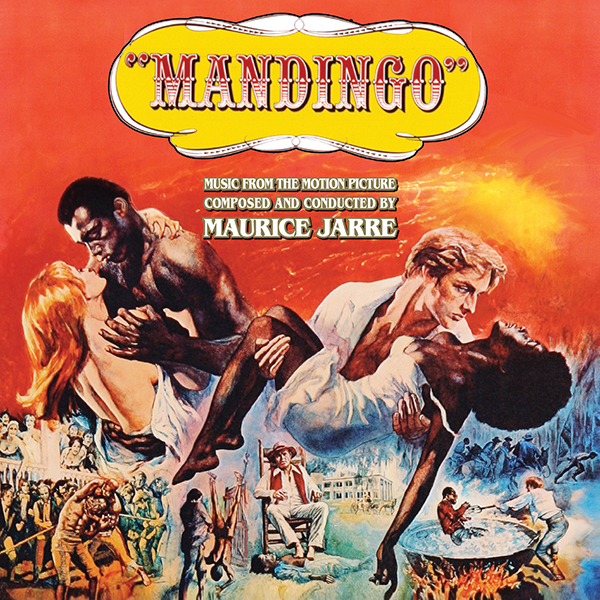
Next up we have a pair of double-features. You'd be hard pressed to find a stranger double bill than Maurice Jarre's Mandingo / Plaza Suite! The former is an unconventional score for a notorious blaxploitation epic, featuring a collaboration between Jarre and blues artist Muddy Waters ("Born in this Time"). The latter is a brief, light-on-its-feet score for a Neil Simon adaptation. The combo makes for a wonderful demonstration of Jarre's amazing versatility. The other double-feature is The Return of a Man Called Horse / Inherit the Wind from maestro Laurence Rosenthal, pairing one of his most sweeping scores with one of his most intimate. Both films are character studies, albeit told on very different scales, and both allow Rosenthal to shine. He remains one of my favorite composers, and I've been blessed to work on so many of his releases over the years!
Finally, we have a trio of stand-alone releases from different composers. First is Craig Safan's The Last Starfighter, a thrilling score for one of the most-loved cult sci-fi films of the 1980s. Newly remastered and expanded, it's never sounded better than it does here. Second is Christopher Young's more recent Killing Season, a rich and meditative blend of American and Eastern European influences. Working on this release was especially interesting for the way Young reworked his material into suite form for album presentation. Third is the premiere release of Michael Kamen's whirlwind action-comedy score for Adventures in Babysitting. I've been a Kamen fan since I first saw Brazil, and it was a joy to dive into this very fun score—much of it unused in the actual film!
That's it for Part 1. Next up: Silvestri, Arnold, Goldsmith, Goodwin, more Young and Safan, and my notes hit vinyl for the first time!
For Intrada, I also had the opportunity to write about two scores by the late James Horner. Though I never had an opportunity to personally interview Mr. Horner, it is always a great honor and pleasure to write about his music. He described himself as a colorist first and foremost, and these two scores are masterful examples. The first, Gorky Park, is a wintry blend of eerie dissonance, powerful low brass, funky urban beats, interpolations of Tchaikovsky and a love theme for the ages. The second, A Far Off Place, is a dynamic, symphonic score that taps into the grandeur, romance and adventure of Africa. Horner was a titan in his field, and these works are just two examples of why he will be so badly missed.
Next up we have a pair of double-features. You'd be hard pressed to find a stranger double bill than Maurice Jarre's Mandingo / Plaza Suite! The former is an unconventional score for a notorious blaxploitation epic, featuring a collaboration between Jarre and blues artist Muddy Waters ("Born in this Time"). The latter is a brief, light-on-its-feet score for a Neil Simon adaptation. The combo makes for a wonderful demonstration of Jarre's amazing versatility. The other double-feature is The Return of a Man Called Horse / Inherit the Wind from maestro Laurence Rosenthal, pairing one of his most sweeping scores with one of his most intimate. Both films are character studies, albeit told on very different scales, and both allow Rosenthal to shine. He remains one of my favorite composers, and I've been blessed to work on so many of his releases over the years!
Finally, we have a trio of stand-alone releases from different composers. First is Craig Safan's The Last Starfighter, a thrilling score for one of the most-loved cult sci-fi films of the 1980s. Newly remastered and expanded, it's never sounded better than it does here. Second is Christopher Young's more recent Killing Season, a rich and meditative blend of American and Eastern European influences. Working on this release was especially interesting for the way Young reworked his material into suite form for album presentation. Third is the premiere release of Michael Kamen's whirlwind action-comedy score for Adventures in Babysitting. I've been a Kamen fan since I first saw Brazil, and it was a joy to dive into this very fun score—much of it unused in the actual film!
That's it for Part 1. Next up: Silvestri, Arnold, Goldsmith, Goodwin, more Young and Safan, and my notes hit vinyl for the first time!
Friday, May 13, 2016
Professor Challenger: New Worlds, Lost Places
I’ve been a long time away
from the actual blogging portion of this blog (though I do try to keep the
sidebar current with my latest work), and many very cool projects have been
released in the interim. One of these is Professor Challenger: New Worlds, Lost Places from EDGE Science Fiction and Fantasy Publishing, edited by
J. R. Campbell and Charles Prepolec (editors of the Gaslight series of Sherlock Holmes anthologies). It’s a brand-new anthology of short stories centered
on the person of George Edward Challenger, the brilliant and volatile hero of
Sir Arthur Conan Doyle’s The Lost World, The Poison Belt and other tales of
wonder and adventure from the creator of Sherlock Holmes.
My short story “The Crystal Minders” is one of ten stories to appear in this collection. It's a macabre account of Professor Challenger’s summons to a lonely estate, where a former mentor and an old rival have made a disturbing scientific breakthrough. Without delving too deeply into spoiler territory, I was inspired by the challenge of taking a more contemporary science-fiction concern and re-framing it in terms that might have been accessible to Edwardian-era readers.
I’m honored to appear in Professor Challenger: New Worlds, Lost Places alongside the very talented Wendy N. Wagner, Stephen Volk, Lawrence C. Connolly, J. R. Campbell, Simon Kurt Unsworth, Mark Morris, Guy Adams & James Goss, Josh Reynolds and Andrew J. Wilson. (The cover illustration, by the way, is by Academy Award-winning artist Dave Elsey!) Making things even more exciting, the anthology has been endorsed by the estate of Sir Arthur Conan Doyle, and has recently been nominated for an Aurora Award from the Canadian Science Fiction & Fantasy Association. It is currently available in paperback and eBook formats.
My short story “The Crystal Minders” is one of ten stories to appear in this collection. It's a macabre account of Professor Challenger’s summons to a lonely estate, where a former mentor and an old rival have made a disturbing scientific breakthrough. Without delving too deeply into spoiler territory, I was inspired by the challenge of taking a more contemporary science-fiction concern and re-framing it in terms that might have been accessible to Edwardian-era readers.
I’m honored to appear in Professor Challenger: New Worlds, Lost Places alongside the very talented Wendy N. Wagner, Stephen Volk, Lawrence C. Connolly, J. R. Campbell, Simon Kurt Unsworth, Mark Morris, Guy Adams & James Goss, Josh Reynolds and Andrew J. Wilson. (The cover illustration, by the way, is by Academy Award-winning artist Dave Elsey!) Making things even more exciting, the anthology has been endorsed by the estate of Sir Arthur Conan Doyle, and has recently been nominated for an Aurora Award from the Canadian Science Fiction & Fantasy Association. It is currently available in paperback and eBook formats.
Tuesday, July 15, 2014
A Year in Review...
It's hard to believe that almost an entire year has gone by between blog posts! Mea maxima culpa. If you've been keeping an eye on the sidebar, you've noticed that it's been a very busy twelve months for soundtrack releases! I'll go through them now on a label-by-label basis, starting with Intrada.
Last year, I was thrilled to get my first Elmer Bernstein assignment: his jazzy, powerhouse score for Edward Dmytryk's The Carpetbaggers. This release features both the magnificent LP recording and, for the first time, the original film tracks. The former has been reissued as a part of Intrada's stunning Ava Collection—but if you want the total package (as well as my liner notes) this is the place to get them! Next up, I worked on James Horner's exciting, Colombian-fueled CIA thriller Clear and Present Danger. That was followed by another project with multinational flair, Laurence Rosenthal's rich and compelling The Forgotten. It's always a special treat to work on a project with Maestro Rosenthal, one of the great composers of his generation, and too often overlooked. Also, Henry Mancini's acclaimed, haunting score for The White Dawn finally made its CD debut last year! This one has been best-known to Mancini fans as a concert suite. I hope they will agree that the full film score is a revelation—exotic and engrossing, and a prime example of Mancini's ability to transcend the "pops" label.
Moving from intense character drama in the Arctic to disco among the stars, I wrote the notes for Intrada's 3-CD set of music from the first season of Buck Rogers in the 25th Century, featuring scores by Johnny Harris, Stu Phillips, Les Baxter and Richard La Salle. Next came a double-feature from Craig Safan: his Korean-inspired score for the TV pilot Remo Williams and his noble Americana score for the TV movie Mission of the Shark, based on the true story of the U.S.S. Indianapolis. After that came two explosive scores: Alan Silvestri's engaging thriller Blown Away and Laurence Rosenthal's potent disaster-epic score for Meteor. This was followed by Bruce Broughton's superlative Young Sherlock Holmes—of one of the composer's most popular and in-demand works, in its very first commercial CD release. My essay covers the project's history and its place in the legacy of Sherlock Holmes, and is followed by Douglass Fake's terrific in-depth interview with Maestro Broughton. Finally, I wrote for two more double-features. The first was from Michael Small: his chilling, religious-themed horror score for Child's Play (not the "Chucky" movie) and his synth-laced drama Firstborn. The other pairing was a real surprise: a duo of obscure scores from the great Alex North. The shorter is a jazzy industrial score for the fifties documentary Decision for Chemistry. This is joined by the debut release of his unused score for 1972's Sounder. If you know Alex North, you know his affinity for the American South, and you will hear it here in spades. It's a wonderful treasure, unheard for far too long.
The last few years have allowed me to branch out to a few other labels. For GNP Crescendo, I co-wrote the notes (with Lukas Kendall) for the remastered edition of Star Trek: The Next Generation, Vol. 2—The Best of Both Worlds, featuring the music of Ron Jones. I'm a huge Star Trek fan and a big admirer of Jones, so this was a real pleasure. I also continued to write for Quartet Records, currently celebrating their 5th Anniversary. First up for the label was Jerry Fielding's The Gambler (not the Kenny Rogers film), a fascinating score, almost wholly based on Mahler's Symphony No. 1. Not your run-of-the-mill assignment! Next up was another very special release: the debut licensed CD of John Williams' 1968 Heidi, for which I was generously granted a co-producer credit after helping parse the surviving score tracks. (They arrived jumbled, having been originally prepared for the narrated LP program.) This was an important release and a great privilege for me, as Heidi was among Williams' first opportunities to show what he could do with a large-scale dramatic feature. It is perhaps the most characteristic work of his pre-Jaws period. Rounding out the slate for Quartet were Lee Holdridge's epic fantasy The Beastmaster, significantly expanded, and Cliff Eidelman's vivacious and lovely action-comedy-romance score for Delirious.
Last but certainly not least is La-La Land Records. Anyone who knows me knows my devotion to the life and work of Shirley Walker. She was a hero of mine, and one of the most gifted and underrated composers I can name. La-La Land is second to none when it comes to giving Shirley's work the deluxe treatment. Last year, I worked on two such releases: Willard and Turbulence. The former is perhaps Walker's finest motion-picture score; its themes burrow deep into the psychology of the characters, and the contrapuntal writing as the story evolves is nothing short of brilliant. The latter is an ingenious study in obsession, warping the familiar "Carol of the Bells" into a twisted motif of Herrmannesque proportions. Speaking of warped, I was extremely happy for the opportunity to write about another Elliot Goldenthal score: his seminal Pet Sematary. It's a haunting, disturbing and strangely poignant work. But La-La Land isn't all doom and gloom! A cornerstone of the label is superhero soundtracks, and I was fortunate to write for several over the past year—all featuring the work of some of my favorite people in this industry: "Dynamic Music Partners" Lolita Ritmanis, Michael McCuistion and Kristopher Carter. These included albums from two relatively recent animated TV series: Young Justice and Batman: The Brave and the Bold. The former highlights captivating sound design, while the latter is founded on the twin pillars of bongos and "crime jazz"—although both sets are enjoyably diverse.
The last release is the closest to my heart: an epic 4-CD set containing 20 full episode scores from Superman: The Animated Series. There's so much I could say about this release. For now, I'll simply say that I think this is some of the very best work that Lolita, Michael, Kristopher, Harvey Cohen, and, of course, Shirley Walker ever did. I spent many years wishing for a release such as this—almost as many as I did for Batman: The Animated Series—and when it finally happened, I not only got to write for it, I got to co-produce it for La-La Land with my friend and colleague Neil S. Bulk. Michael Matessino prepared the audio, Jim Titus prepared the artwork, and the result is stunning. It's another spectacular entry in the label's long and continuing line of releases from the animated DC Universe.
That's it for now! Thanks for sticking around. And very special thanks to the many composers and filmmakers who were generous enough to share their time with me as I worked on these releases. It's been a fantastic twelve months, and I think the coming months are going to be pretty amazing as well!
Last year, I was thrilled to get my first Elmer Bernstein assignment: his jazzy, powerhouse score for Edward Dmytryk's The Carpetbaggers. This release features both the magnificent LP recording and, for the first time, the original film tracks. The former has been reissued as a part of Intrada's stunning Ava Collection—but if you want the total package (as well as my liner notes) this is the place to get them! Next up, I worked on James Horner's exciting, Colombian-fueled CIA thriller Clear and Present Danger. That was followed by another project with multinational flair, Laurence Rosenthal's rich and compelling The Forgotten. It's always a special treat to work on a project with Maestro Rosenthal, one of the great composers of his generation, and too often overlooked. Also, Henry Mancini's acclaimed, haunting score for The White Dawn finally made its CD debut last year! This one has been best-known to Mancini fans as a concert suite. I hope they will agree that the full film score is a revelation—exotic and engrossing, and a prime example of Mancini's ability to transcend the "pops" label.
Moving from intense character drama in the Arctic to disco among the stars, I wrote the notes for Intrada's 3-CD set of music from the first season of Buck Rogers in the 25th Century, featuring scores by Johnny Harris, Stu Phillips, Les Baxter and Richard La Salle. Next came a double-feature from Craig Safan: his Korean-inspired score for the TV pilot Remo Williams and his noble Americana score for the TV movie Mission of the Shark, based on the true story of the U.S.S. Indianapolis. After that came two explosive scores: Alan Silvestri's engaging thriller Blown Away and Laurence Rosenthal's potent disaster-epic score for Meteor. This was followed by Bruce Broughton's superlative Young Sherlock Holmes—of one of the composer's most popular and in-demand works, in its very first commercial CD release. My essay covers the project's history and its place in the legacy of Sherlock Holmes, and is followed by Douglass Fake's terrific in-depth interview with Maestro Broughton. Finally, I wrote for two more double-features. The first was from Michael Small: his chilling, religious-themed horror score for Child's Play (not the "Chucky" movie) and his synth-laced drama Firstborn. The other pairing was a real surprise: a duo of obscure scores from the great Alex North. The shorter is a jazzy industrial score for the fifties documentary Decision for Chemistry. This is joined by the debut release of his unused score for 1972's Sounder. If you know Alex North, you know his affinity for the American South, and you will hear it here in spades. It's a wonderful treasure, unheard for far too long.
The last few years have allowed me to branch out to a few other labels. For GNP Crescendo, I co-wrote the notes (with Lukas Kendall) for the remastered edition of Star Trek: The Next Generation, Vol. 2—The Best of Both Worlds, featuring the music of Ron Jones. I'm a huge Star Trek fan and a big admirer of Jones, so this was a real pleasure. I also continued to write for Quartet Records, currently celebrating their 5th Anniversary. First up for the label was Jerry Fielding's The Gambler (not the Kenny Rogers film), a fascinating score, almost wholly based on Mahler's Symphony No. 1. Not your run-of-the-mill assignment! Next up was another very special release: the debut licensed CD of John Williams' 1968 Heidi, for which I was generously granted a co-producer credit after helping parse the surviving score tracks. (They arrived jumbled, having been originally prepared for the narrated LP program.) This was an important release and a great privilege for me, as Heidi was among Williams' first opportunities to show what he could do with a large-scale dramatic feature. It is perhaps the most characteristic work of his pre-Jaws period. Rounding out the slate for Quartet were Lee Holdridge's epic fantasy The Beastmaster, significantly expanded, and Cliff Eidelman's vivacious and lovely action-comedy-romance score for Delirious.
Last but certainly not least is La-La Land Records. Anyone who knows me knows my devotion to the life and work of Shirley Walker. She was a hero of mine, and one of the most gifted and underrated composers I can name. La-La Land is second to none when it comes to giving Shirley's work the deluxe treatment. Last year, I worked on two such releases: Willard and Turbulence. The former is perhaps Walker's finest motion-picture score; its themes burrow deep into the psychology of the characters, and the contrapuntal writing as the story evolves is nothing short of brilliant. The latter is an ingenious study in obsession, warping the familiar "Carol of the Bells" into a twisted motif of Herrmannesque proportions. Speaking of warped, I was extremely happy for the opportunity to write about another Elliot Goldenthal score: his seminal Pet Sematary. It's a haunting, disturbing and strangely poignant work. But La-La Land isn't all doom and gloom! A cornerstone of the label is superhero soundtracks, and I was fortunate to write for several over the past year—all featuring the work of some of my favorite people in this industry: "Dynamic Music Partners" Lolita Ritmanis, Michael McCuistion and Kristopher Carter. These included albums from two relatively recent animated TV series: Young Justice and Batman: The Brave and the Bold. The former highlights captivating sound design, while the latter is founded on the twin pillars of bongos and "crime jazz"—although both sets are enjoyably diverse.
That's it for now! Thanks for sticking around. And very special thanks to the many composers and filmmakers who were generous enough to share their time with me as I worked on these releases. It's been a fantastic twelve months, and I think the coming months are going to be pretty amazing as well!
Tuesday, July 16, 2013
This Is How You Die
Today marks the release of my short story "Apitoxin" as part of This Is How You Die, a speculative fiction anthology from editors Ryan North, Matthew Bennardo, and David Malki !. It is the sequel to the bestselling Machine of Death. The stories within these volumes are incredibly diverse, running the gamut from sober and philosophical to uproariously funny. All the stories share a common premise: the existence of a machine that, based on a simple blood test, can tell you how you will die. Not where ... not when ... simply how. The predictions never change, no matter how many times you take the test. And they always come true. The caveat is that the predictions may not mean what you assume they mean; they can be vague, or ironic. For example: "old age" could mean getting killed by an old person in some fashion, as Ryan North posits in the webcomic that kicked off the whole shebang.
The original Machine of Death was published independently a few years back, and was the #1 bestselling book on Amazon on the day of its release. That got a lot of attention, leading to This Is How You Die getting picked up by the Hachette Book Group division Grand Central Publishing (the same folks who publish Stephen Colbert's books, as it happens). We're unlikely to be #1 on Amazon this time around; sales will be spread out over many more retailers, such as Barnes & Noble and iTunes. Also, by ill fate, our competition this week turned out to be an obscure writer by the name of J. K. Rowling. But we're still shooting for the Moon! So far, the book has received glowing reviews from Publishers Weekly (who named it one of the Best Summer Reads of 2013), Kirkus Reviews, Library Journal and The A.V. Club. You can visit the official website to learn more, watch a Funny or Die promo video, and read about the campaign to get the book on the New York Times Bestseller List (which would be awesome, thanks very much).
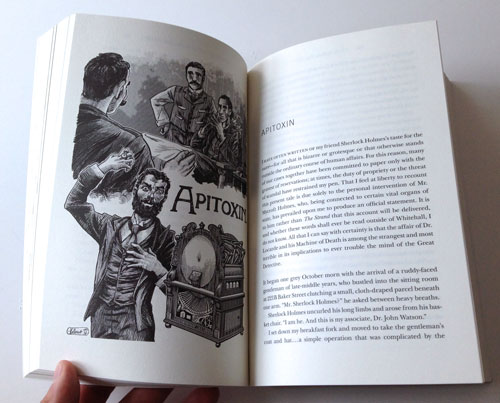
I've had a chance to see the finished book now, and it's jam-packed with terrific stories, comics and artwork. My own story, "Apitoxin," is a tale of Sherlock Holmes and his encounter with the Machine of Death, and was brilliantly illustrated by Indigo Kelleigh. His drawings are inspired by the original Sherlock Holmes illustrations that Sidney Paget created for The Strand Magazine, and the results are simply spectacular! There will also be an audiobook released at some point. Needless to say, I'm incredibly excited to be part of such an amazing project!
The original Machine of Death was published independently a few years back, and was the #1 bestselling book on Amazon on the day of its release. That got a lot of attention, leading to This Is How You Die getting picked up by the Hachette Book Group division Grand Central Publishing (the same folks who publish Stephen Colbert's books, as it happens). We're unlikely to be #1 on Amazon this time around; sales will be spread out over many more retailers, such as Barnes & Noble and iTunes. Also, by ill fate, our competition this week turned out to be an obscure writer by the name of J. K. Rowling. But we're still shooting for the Moon! So far, the book has received glowing reviews from Publishers Weekly (who named it one of the Best Summer Reads of 2013), Kirkus Reviews, Library Journal and The A.V. Club. You can visit the official website to learn more, watch a Funny or Die promo video, and read about the campaign to get the book on the New York Times Bestseller List (which would be awesome, thanks very much).
I've had a chance to see the finished book now, and it's jam-packed with terrific stories, comics and artwork. My own story, "Apitoxin," is a tale of Sherlock Holmes and his encounter with the Machine of Death, and was brilliantly illustrated by Indigo Kelleigh. His drawings are inspired by the original Sherlock Holmes illustrations that Sidney Paget created for The Strand Magazine, and the results are simply spectacular! There will also be an audiobook released at some point. Needless to say, I'm incredibly excited to be part of such an amazing project!
Monday, March 11, 2013
Release Roundup: Winter 2012/2013
Time for another round of catch-up! As the sidebar shows, there have been a "bunch" (pun intended) of new CD releases for which I have written liner notes over the past several months. I've also been busy working as a co-producer on an upcoming release, which is a whole new experience for me—and part of the reason I've had so little time to devote to the blog! More on that in a few months. In the meantime, as the top graphic indicates, things have been getting wild!
First up, I'm very pleased to report my first two jobs for Quartet Records and its founder José M. Benítez. Based out of Spain (but catering to an international market), Quartet has been around for a while now, releasing many dozens of classic and current soundtracks—some reissues, others for the first time ever. Their growing prominence could not come at a better time, since the Film Score Monthly label has released its last production (more on that shortly). My first job for Quartet was for an expanded edition of Henry Mancini's score for Revenge of the Pink Panther (1978). This was the last of the Blake Edwards/Peter Sellers films to be made while Sellers was alive, and it's an outrageously fun entry in the series—with influences from disco to dixieland, and chock full of classic Mancini melodies. My second for Quartet is another Henry Mancini score, this time for the 1970 Vittorio De Sica film Sunflower (a.k.a. I Girasoli) starring Sophia Loren and Marcello Mastroianni. This one is definitely NOT a comedy, telling the story of an Italian woman who travels to Russia on a desperate search for her MIA husband in the aftermath of World War II. Although the film is not terribly well known in America, the score showcases some of the composer's most striking and beautiful melodies. It is also Quartet's 100th release, so I'm doubly honored to be involved.
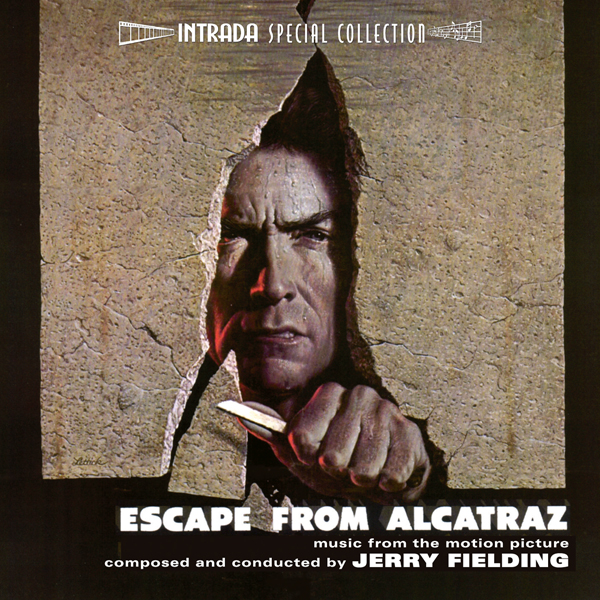
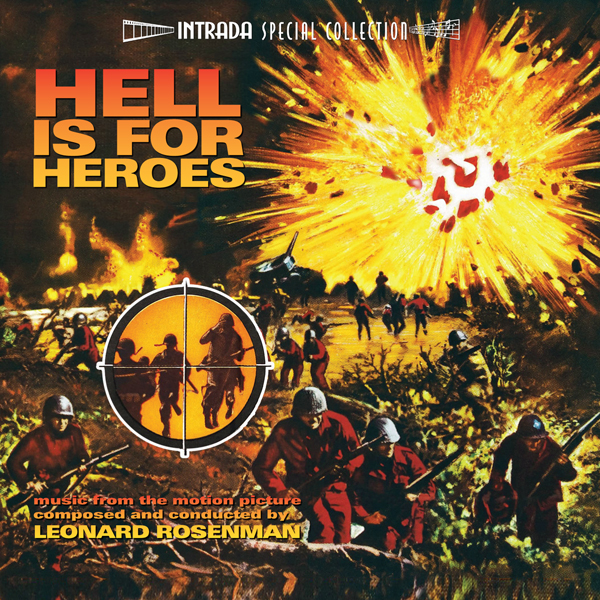
On the Intrada front, this winter saw the release of an exciting double-feature premiere of scores for films by influential director Don Siegel—both inspired by true events. The first is a short score by composer Leonard Rosenman for the WWII film Hell is for Heroes (1962), which stars Steve McQueen as a brash, independent-minded private holding his squad together along an indefensible position on the Siegfried Line. Rosenman's score is angular and modern, in his characteristic style. It's short, but it packs a heck of a wallop—and it neatly foreshadows his work on the popular TV series Combat. Joining Rosenman on the same disc is Jerry Fielding's score for the prison-break classic Escape from Alcatraz (1979), which stars Clint Eastwood as ambitious lifer Frank Lee Morris. It's a fascinating entry in Fielding's filmography: a harsh and challenging work written in the style of musique concrète, which involves the electronic manipulation of both live instruments and sound effects. It's an utterly unique score, and a true testament to Fielding's brilliance.
Friday, November 30, 2012
Reflections on Batman: The Animated Series and Shirley Walker
The series was also my first exposure to the work of Shirley Walker, who supervised and led a team of composers to create the music for the show. Even at twelve, I was already a certified film and television music fan, so I was especially tuned in to the scores of my favorite programs. And I knew right off the bat (so to speak) that Batman: The Animated Series was something special ... something far more enthralling and interesting than the norm. I knew that most of the cartoons I watched used library music, because I would hear the same pieces again and again. Batman, by contrast, used the same themes for characters, but did so in the context of original underscore for every episode. And what themes and scores they were! Gothic, brooding, thrilling; as wild and colorful as the Dark Knight's gallery of rogues, and the perfect complement to the show's superlative writing, acting and directing.
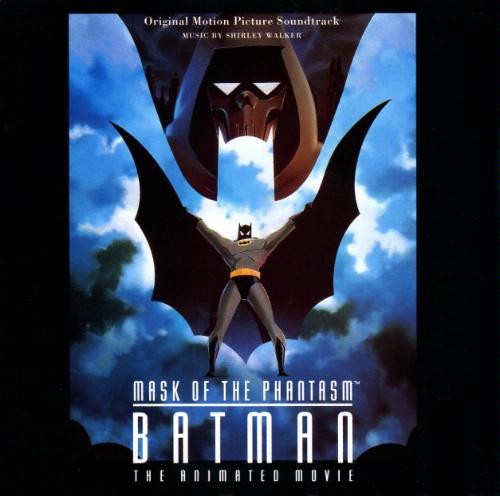
You can imagine my surprise when I went to the local record shop (Harmony House, for those of you who remember) and discovered that there was no soundtrack CD available to buy. At the time, market realities meant nothing to me. Every soundtrack I had wanted, I'd been able to obtain in some shape or form. It had never occurred to me that music that was so good might not have an album to go along with it. I found some consolation in the soundtrack release for the 1993 theatrical movie Batman: Mask of the Phantasm, also by Shirley Walker and featuring several themes from the series. But it was all-too-short, and lacked so many of the enthralling melodies that I craved. The only other solo Shirley Walker score available at the time was Memoirs of an Invisible Man. I resigned myself to enjoying her music in the context of the show, while it lasted, and thereafter sang her praises to anyone who would listen to me. My appreciation for her incredible gifts as a composer and orchestrator only grew deeper over the years. Shirley became one of my artistic heroes, with her music playing a significant role in my imaginative life.
Fast-forward to 2006. I had begun to write about film and TV music for Film Score Monthly magazine in 2001. Although I wrote mainly reviews and articles, I had conducted one brief interview, with the widow of a relatively obscure composer whom I admired (Harlene Stein, wife of Ronald Stein). I had been knocking around the idea of approaching Shirley Walker for an interview for a while, but I lacked the wherewithal to actually go about it. Finally, my friend and colleague Doug Adams grew impatient with me and volunteered to set up the interview. He had interviewed her himself years prior, circa her 1999 re-score of Mystery Men. The only caution he gave me was to tread carefully if the subject of her family came up, because her beloved husband Don had tragically passed away earlier in the year. I nervously sent her an email, and was thrilled when she readily agreed. We spoke on the evening of September 8, 2006. I called an hour after our scheduled appointment (I had miscalculated the time difference between Michigan and California), but she graciously didn't mention it, and responded to all my questions about her work and career with detail and good humor. The conversation drifted pleasantly once my notes had been exhausted, and by the time I hung up the phone I felt on top of the world.
Over the coming weeks, I transcribed the interview and exchanged several more emails with Shirley. The piece was published in two parts under the title "A Woman of Many Capes" in the October 2006 and November 2006 issues of Film Score Monthly Online. Then, on the evening of November 30, while I was working at the library, I received a text message from Doug informing me that Shirley had passed away due to an aneurysm. The news left me devastated. I took my break immediately, sitting alone in the parking lot of a nearby Burger King, and I remember being numb for the remainder of my shift. That night, I sent a note of condolence to the Dynamic Music Partners (Michael McCuistion, Lolita Ritmanis and Kristopher Carter), all former members of Shirley's team whom I had also interviewed for the magazine. We agreed to present their piece without alteration, save for a short memorial preface. The interview ran and life went on, although it was a long time before I could listen to Shirley's music without experiencing a lingering, bitter pang.
Almost one year later, at the beginning of November 2007, I started writing liner notes for the Intrada record label. A year after that, in December 2008, La-La Land Records announced a 2-CD world premiere release of scores from Batman: The Animated Series. Although hardly a complete representation (no single 2-CD set could have possibly done justice to the full scope and breadth of the series) it was a brilliant flame in what had hitherto been a dark void, and included music from many of my favorite episodes. I don't mind saying that I shed a few tears. A few months later, they released an expanded version of Batman: Mask of the Phantasm, which I viewed as equally important and essential. It was the beginning of a long-awaited renaissance. Superb releases of Shirley Walker's music for The Flash and Space: Above and Beyond would follow from LLL over the coming years. Meanwhile, I wrote about her supplementary music for The Black Stallion for Intrada (a gig that put me in touch with conductor and music editor Dan Carlin, Shirley's friend and co-conspirator) and began to write liner notes for La-La Land, including for Danny Elfman's Batman Returns and Elliot Goldenthal's Batman Forever.
In the Fall of 2011, I was asked to write the liner notes for the long-delayed second volume of music from Batman: The Animated Series. It would be 4-CDs, twice the length of volume one, and go a long way towards providing a more comprehensive overview of the show's music. Needless to say, I threw myself into the job with gusto. I contacted many of the show's composers for new interviews, and solicited further information from Shirley's colleague Bruce Broughton, and from Doug Frank, the Warners music executive who was responsible for hiring her. Batman: The Animated Series, Vol. 2 was released at Comic-Con San Diego in July of this year, just a few months prior to the show's 20th Anniversary. To date, nothing I have worked on has meant more to me on a personal level. I owe an incredible debt to the generous people who made it possible, in particular MV Gerhard and Matt Verboys of La-La Land Records, as well as Shirley's family of composers, all of whom were outstanding in their support of this project. I am so thrilled that this music, which I consider to be perhaps the best ever written for television, is finally getting out there for people to discover and enjoy. And it's not over yet! Future volumes of both Batman and Superman are in the works, and other treasures besides. If I could go back and show my twelve-year-old self what's been done, and what is being done even as I type this, it would blow his mind. I still don't quite believe it myself. But the evidence is right in front of me, on my CD shelf. I used to dream about holding such a release in my hands. It's not every day that a dream literally comes true.
Mission Galactica: Journey's End
The above graphic just about sums it up. For almost two years, I've been writing about this series and music for Intrada's landmark four-volume, 7-CD series. The third volume was released over the summer, and the fourth volume was finally released this past month (both with new cover artwork by Paul Shipper). At last, fans have ALL the surviving music (virtually everything) which Stu Phillips composed for the original Battlestar Galactica series and its associated film presentations, as well as some choice cuts from the spinoff Galactica 1980. It's been a very happy project for me, and thanks are once again due to Douglass and Regina Fake, Roger Feigelson, Joe Sikoryak, Mike Matessino, and especially maestro Phillips, who was always ready to lend an insightful word. Apologies if I've forgotten anyone. It's been a long journey, but Galactica has finally come home!
Release Roundup: Fall 2012
It's good to be busy, and Fall 2012 was the busiest quarter I can remember! Sadly, that means I allowed my blog updating to lapse (although I try to always keep the sidebar up to date with my latest doings). Here's a quick review of three liner notes projects from the last few months...
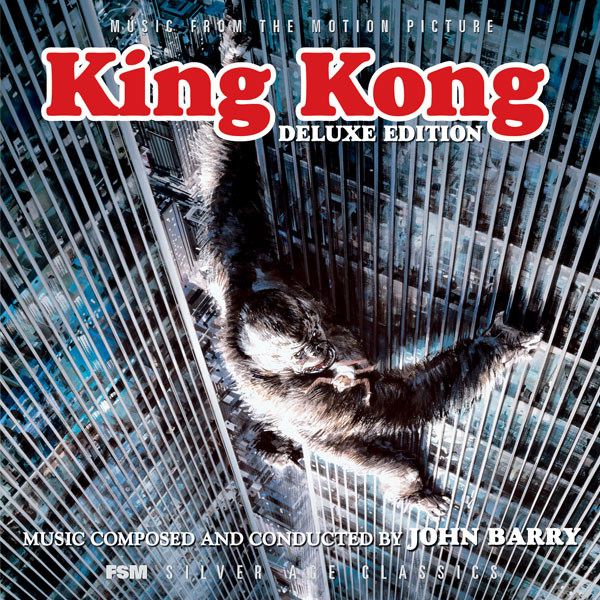
First up is Film Score Monthly's release of John Barry's King Kong. Barry fans may recall that FSM issued the original '76 album assembly of Kong back in 2005. This new Deluxe Edition 2-CD release includes that assembly, remastered, but it also includes the expanded film score and a large assortment of fascinating alternates. I've always loved this score—it's vintage Barry, suffused with his incomparable blend of melancholy and intensity—and the new presentation really shines like never before.
Next is Dennis McCarthy's Star Trek: Generations for GNP Crescendo. As with FSM and Kong, GNP previously released the original album presentation of this score (this was back in 1994, concurrent with the film's release). And as with Kong, this presentation includes the complete film score on disc one, and the original album plus bonus tracks on disc two. I did not actually pen the booklet notes for this release—that was done by Lukas Kendall and Jeff Bond. But I contributed a detailed track-by-track analysis, which can be read for free online at GNP's website.
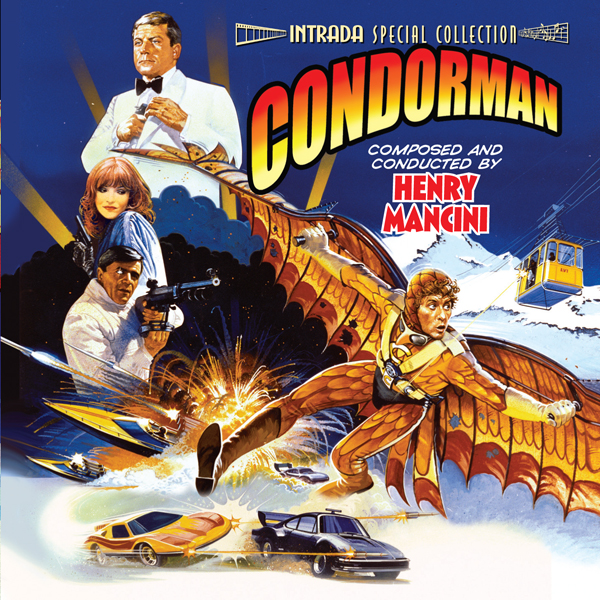
Finally, we have Intrada's world premiere release of Henry Mancini's score for the 1981 superhero/spy spoof Condorman. The film is a live-action Disney picture from their experimental late-seventies/early-eighties period, and over the years it has both taken a critical beating and developed a significant cult following. It had no soundtrack release of any kind back in the day, making it one of the most-requested Mancini scores. The composer's fans will find it was worth the wait; it's big, romantic, and all kinds of fun.
First up is Film Score Monthly's release of John Barry's King Kong. Barry fans may recall that FSM issued the original '76 album assembly of Kong back in 2005. This new Deluxe Edition 2-CD release includes that assembly, remastered, but it also includes the expanded film score and a large assortment of fascinating alternates. I've always loved this score—it's vintage Barry, suffused with his incomparable blend of melancholy and intensity—and the new presentation really shines like never before.
Next is Dennis McCarthy's Star Trek: Generations for GNP Crescendo. As with FSM and Kong, GNP previously released the original album presentation of this score (this was back in 1994, concurrent with the film's release). And as with Kong, this presentation includes the complete film score on disc one, and the original album plus bonus tracks on disc two. I did not actually pen the booklet notes for this release—that was done by Lukas Kendall and Jeff Bond. But I contributed a detailed track-by-track analysis, which can be read for free online at GNP's website.
Finally, we have Intrada's world premiere release of Henry Mancini's score for the 1981 superhero/spy spoof Condorman. The film is a live-action Disney picture from their experimental late-seventies/early-eighties period, and over the years it has both taken a critical beating and developed a significant cult following. It had no soundtrack release of any kind back in the day, making it one of the most-requested Mancini scores. The composer's fans will find it was worth the wait; it's big, romantic, and all kinds of fun.
Friday, August 31, 2012
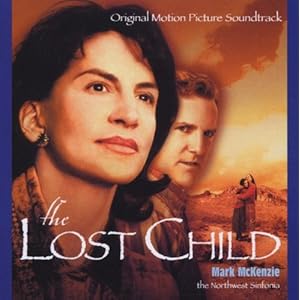
Family Dramas and The Lost Child
Scoring family-oriented dramas strikes me as an often thankless task, particularly when the filmmakers are aiming for an "all ages" audience. There don't tend to be as many opportunities for big, attention-getting setpieces or larger-than-life character themes of the sort film music fans lap up, and the stories hew towards the gentle and uncontroversial. The music is expected to convey emotion, but within relatively "safe" boundaries, which seems (from my own non-composer point of view, at least) like a real challenge. There are no explosions or flashy special effects to hide behind; you can't bust out a jagged rhythm and a pumped-up horn line and call it a day. Your music is unusually exposed. And even if you have the aptitude for big, bold melodies, you have to be careful not to go too far in that direction lest your music overwhelm the intimacy of the drama. Step an inch over the line, and you get accused of being treacly or manipulative. It comes down to the ability to write a simple, beautiful melody that hits the sweet spot of not too circumspect and not overblown. That's a tough thing to do well.
One composer who can do this kind of "sweet spot" score well is Mark McKenzie. Mark has a gift for writing heartfelt melodies that convey grace and tranquility, making him a great fit for dramas with a strong family or religious theme. He's done splendid work as a composer in many other genres, of course; but he seems to have a special affinity for the warm and intimate, which can make for a nice change of pace from all the sturm and drang. Hallmark Hall of Fame has recently re-released just such a score: Mark's music for the 2000 film The Lost Child, performed by the Northwest Sinfonia. Previously available on CD and long out of print (secondhand copies are terribly expensive), it is now available as a digital download from Amazon, iTunes and CD Baby. I haven't seen the film, but the score is a lovely piece of work, with a tender main theme that gets a lot of play. The orchestrations are clear and warm in a way that is reminiscent of Jerry Goldsmith, who often employed Mark's services as an orchestrator. If you're looking for something peaceful and gently uplifting, The Lost Child is definitely worth checking out.
Wednesday, July 11, 2012
Jawing About Jaws
Saturday, June 30, 2012
There Is No Comparison...
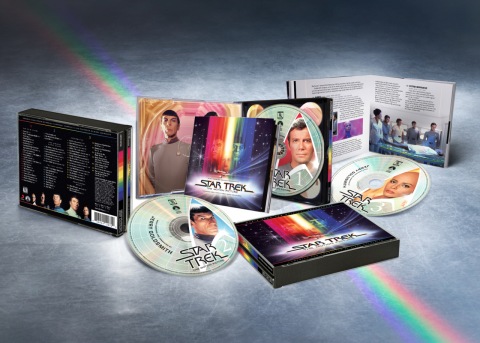
Earlier this month, La-La Land Records released a definitive 3-CD presentation of Jerry Goldsmith's score to Star Trek: The Motion Picture.
I met Jerry Goldsmith once, in 1998. Star Trek: The Motion Picture was the first score I asked him to autograph. He signed it vertically (along the center of the rainbow) rather than utilizing the more obvious giant white space beneath the Enterprise; Goldsmith was never one to take the obvious path!
For the emotions connected with it, that CD remains one of my most cherished possessions. I won't be listening to the physical disc again, however. In truth, I haven't since Columbia/Legacy released their expanded edition back in 1999. And now, that second release has been superceded. La-La Land's new set is utterly perfect. It contains everything I could want ... everything I could imagine. Under the sure hand of Michael Matessino, who also co-wrote the liner notes with Jeff Bond, and the rest of the LLL team, nothing has been left off; no expense spared; no aspect of the remastering neglected. Even the art design by Jim Titus is superlative. This is one of the best scores of all time. It now takes its place as one of the best and most comprehensive soundtrack releases of all time.
As the film's tagline boasted, there is no comparison.
Subscribe to:
Posts (Atom)