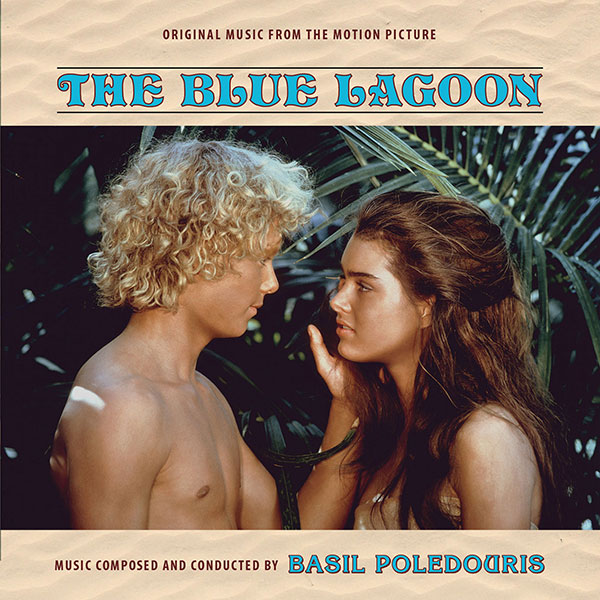
I'm ringing in the new year with the third part of my "Catching up with Intrada" spotlight! After providing notes for the first film in the series, I was delighted to be asked to do notes for The Monkey King 2. It's another exquisite fantasy score from Christopher Young, and the first album I've done for a theatrically released film still in its initial run. The sequel is less action-packed than the original, but I personally found it more dramatically rich. After that came a pair of scores by a man I much admired, the late Basil Poledouris. The Blue Lagoon and Return to the Blue Lagoon were written at very different points in his career, the former being one of his earliest major scores and the latter being written after he was well-established in the industry. Both, however, are stunning works of symphonic beauty.

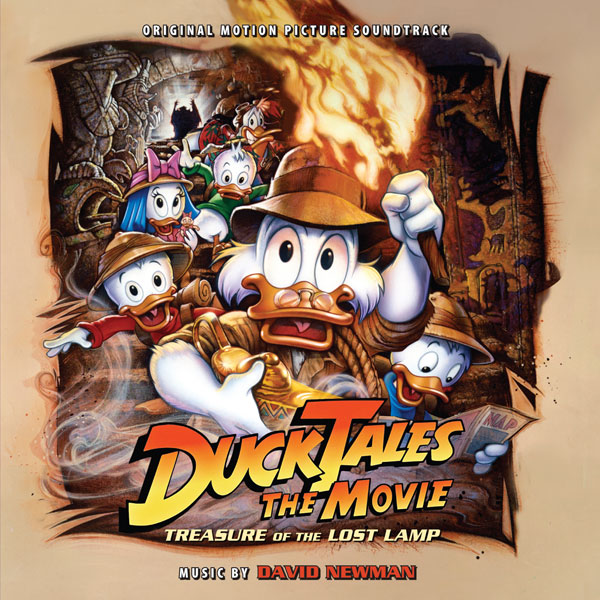
Next came some scores by David Newman, one of the hardest-working conductors in the business and a fine composer who knows how to marshal the resources provided by a large symphony orchestra. First up was his score to DuckTales: The Movie—Treasure of the Lost Lamp. I have very fond memories of this film from my childhood, and the music is as grand and adventurous as one could hope for. The second score was Operation Dumbo Drop, a family adventure score that I missed the first time around but was very happy to discover thanks to this release. I'd have loved it as a teenager, and it holds up incredibly well today. This soundtrack was paired on CD with an important score by Alex North: his complete score for the classic film Good Morning, Vietnam. There's not much underscore in the film, which is famous for its use of pop songs, but what's there is haunting and emotionally vivid.
These projects were followed with a pair of epics, one for the big screen and one for the small screen. James Horner's Troy is a score that I didn't get a true impression of the first time I heard it, which was in hacked-up form to accompany the director's cut DVD. For this project, I sought out the theatrical cut and was intrigued to discover that, contrary to many critics who found the director's cut a huge improvement, I much preferred the abbreviated cut with Horner's score intact. (For completists who pick up this album, don't toss your original CD, as it contains a few minutes of material that had to be left off this new edition.) The small-screen epic was a brand new edition of Maurce Jarre's Shōgun. I had previously done notes for Intrada's straight reissue of the original LP. This release, however, was a monumental 3-CD presentation of the full score, an album reconstruction and copious extras. I was honored to produce this CD for Intrada with Lukas Kendall, in addition to penning all-new notes.

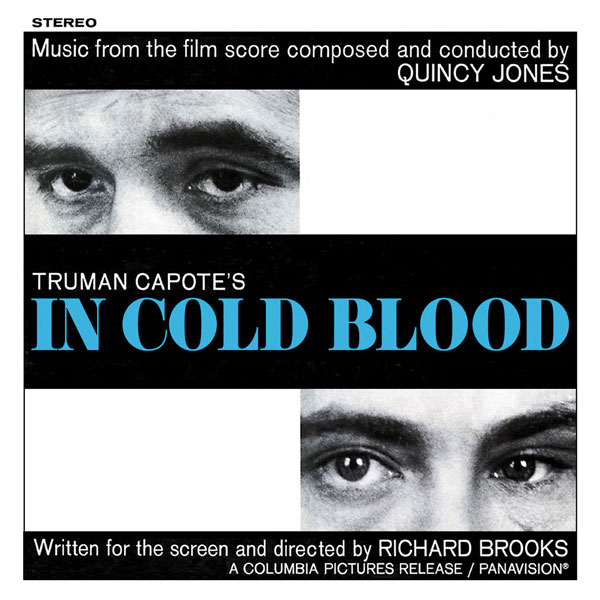
Finally, my most recent release for Intrada was a double-feature of music by the legendary Quincy Jones. Mackenna's Gold is a western, and a very fine one, with bracing themes and a memorable ballad performed by José Feliciano. In Cold Blood is an incredible jazz fever dream of a score for the 1967 film based on Truman Capote's famous memoir. These are two of Jones' finest scores, and it was an absolute delight to get to write about them.
Thanks for revisiting these projects with me! Still to come: retrospectives for Quartet, La-La Land and a post about my first piece commissioned specially for an LP release.
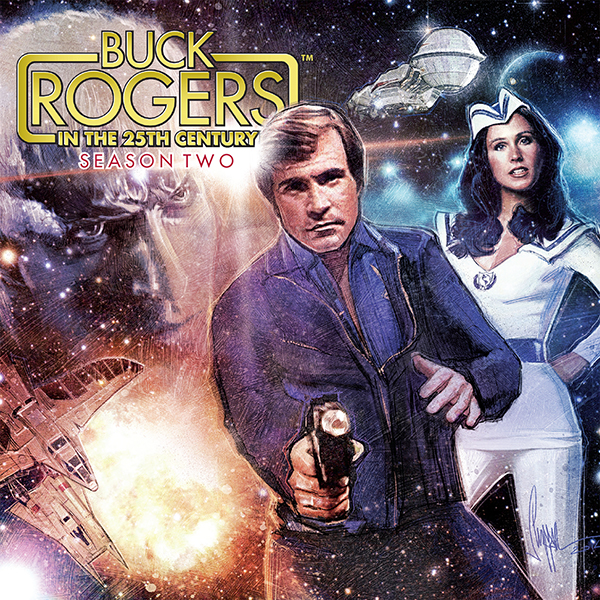
There's quite a lot of ground to cover since my last music update, so I'll be going through the releases I've worked on by label. First up is Intrada, which has had such a prodigious output these last few years that I'll be breaking my recap into two parts! We begin with Buck Rogers in the 25th Century - Season Two, a deluxe 4-CD set of music from the classic television series. It contains scores by Stu Phillips, John Cacavas and Herbert Don Woods, but the majority of the music on this set was composed by Bruce Broughton, who joined the show during its second season and confirmed the outstanding dramatic chops that would help him become one of the most respected composers in Hollywood. The set is now sold out, but well worth hunting down!

For Intrada, I also had the opportunity to write about two scores by the late James Horner. Though I never had an opportunity to personally interview Mr. Horner, it is always a great honor and pleasure to write about his music. He described himself as a colorist first and foremost, and these two scores are masterful examples. The first, Gorky Park, is a wintry blend of eerie dissonance, powerful low brass, funky urban beats, interpolations of Tchaikovsky and a love theme for the ages. The second, A Far Off Place, is a dynamic, symphonic score that taps into the grandeur, romance and adventure of Africa. Horner was a titan in his field, and these works are just two examples of why he will be so badly missed.
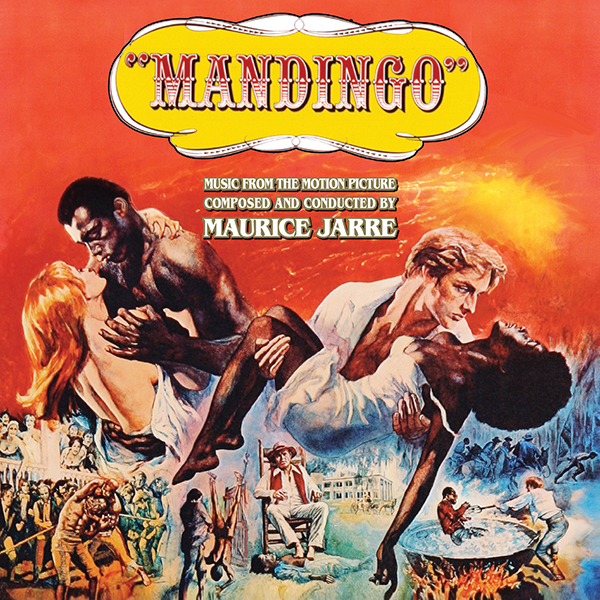

Next up we have a pair of double-features. You'd be hard pressed to find a stranger double bill than Maurice Jarre's Mandingo / Plaza Suite! The former is an unconventional score for a notorious blaxploitation epic, featuring a collaboration between Jarre and blues artist Muddy Waters ("Born in this Time"). The latter is a brief, light-on-its-feet score for a Neil Simon adaptation. The combo makes for a wonderful demonstration of Jarre's amazing versatility. The other double-feature is The Return of a Man Called Horse / Inherit the Wind from maestro Laurence Rosenthal, pairing one of his most sweeping scores with one of his most intimate. Both films are character studies, albeit told on very different scales, and both allow Rosenthal to shine. He remains one of my favorite composers, and I've been blessed to work on so many of his releases over the years!


Finally, we have a trio of stand-alone releases from different composers. First is Craig Safan's The Last Starfighter, a thrilling score for one of the most-loved cult sci-fi films of the 1980s. Newly remastered and expanded, it's never sounded better than it does here. Second is Christopher Young's more recent Killing Season, a rich and meditative blend of American and Eastern European influences. Working on this release was especially interesting for the way Young reworked his material into suite form for album presentation. Third is the premiere release of Michael Kamen's whirlwind action-comedy score for Adventures in Babysitting. I've been a Kamen fan since I first saw Brazil, and it was a joy to dive into this very fun score—much of it unused in the actual film!
That's it for Part 1. Next up: Silvestri, Arnold, Goldsmith, Goodwin, more Young and Safan, and my notes hit vinyl for the first time!
